FAQ
Frequently Asked Questions
When does my vessel need a compass adjustment?
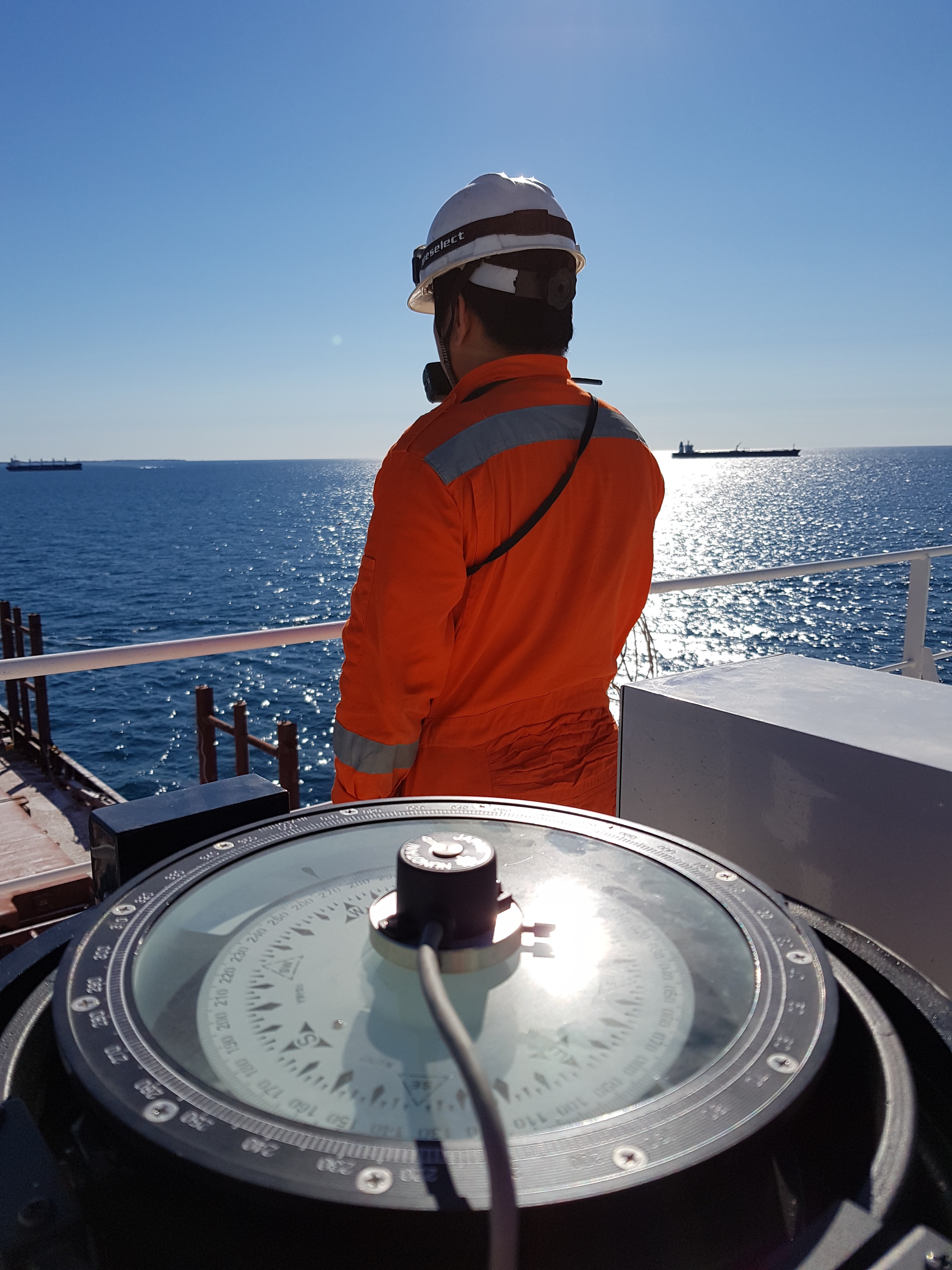
Physical Attendance (Onboard) A licensed Compass Adjuster attends and joins the vessel at sea. The vessel manoeuvres onto all required headings, allowing the Compass Adjuster to identify the deviation and where necessary fit and reposition the appropriate hard iron and soft iron correctors. A Compass Adjuster’s Declaration and Deviation Card is issued on completion. Dockside Attendance (Onboard at Port/Berth) A licensed Compass Adjuster attends the vessel while she is berthed alongside in port. The Compass Adjuster performs the necessary adjustments and assessments and issues a Compass Adjuster’s Declaration and Deviation Card on completion. This option is suited to vessels where a dockside service meets the applicable operational and survey requirements. Remote Adjustment For vessels where physical attendance by a Compass Adjuster is not practical, we provide a fully guided remote adjustment service conducted via telephone, email and digital communication. Our licensed Compass Adjuster issues written instructions to the vessel’s officers, who carry out the required observations and procedures during the vessel’s normal voyage. Data, observations and photographs are submitted to us for review. We assess the information, provide further instructions, and guide the vessel’s officers through any corrections required on board. A Compass Adjuster’s Declaration and Deviation Card is issued on completion. This service is conducted with no impact to vessel operations or schedule.
Can you adjust the compass on my vessel while it is underway?
Yes. Our remote adjustment service allows our licensed Compass Adjuster to guide the vessel’s officers through the full adjustment process while the vessel is on her normal voyage, without the need to divert to port or impact operations.
Does my vessel need a compass adjustment certificate even if it has a flag state exemption?
Particular flag states grant exemptions from the requirement to hold a current Compass Adjuster’s Declaration and Deviation Card — for example, for vessels fitted with Dynamic Positioning (DP) systems and multiple gyrocompasses. However, these exemptions are not universally recognised by all port states. The Indian Directorate General of Shipping (DGS) is a notable example — it does not generally recognise flag state exemptions that have not been equivalently granted to Indian-flagged vessels. This means vessels calling at Indian ports or operating within Indian waters, including DP-class vessels fitted with multiple gyrocompasses, are required to hold a current Compass Adjuster’s Declaration and Deviation Card regardless of any flag state exemption. More broadly, Port State Control inspectors operating under any of the regional Memoranda of Understanding (MoUs) — including the Tokyo MoU (Asia-Pacific), Paris MoU (Europe and North Atlantic), Indian Ocean MoU, and others — apply the requirements of SOLAS Chapter V directly. A vessel that cannot produce a current deviation card during a PSC inspection may be issued a deficiency notice or detained, regardless of any flag state exemption held. Vessel owners and operators are strongly advised to confirm the compass certificate requirements of every port state their vessel intends to call at, and not to rely solely on flag state exemptions when trading internationally. If you are unsure whether your vessel requires a current compass adjustment certificate for a specific port or trade area, contact us and we will be happy to advise.
What is a Compass Adjuster’s Declaration and Deviation Card?
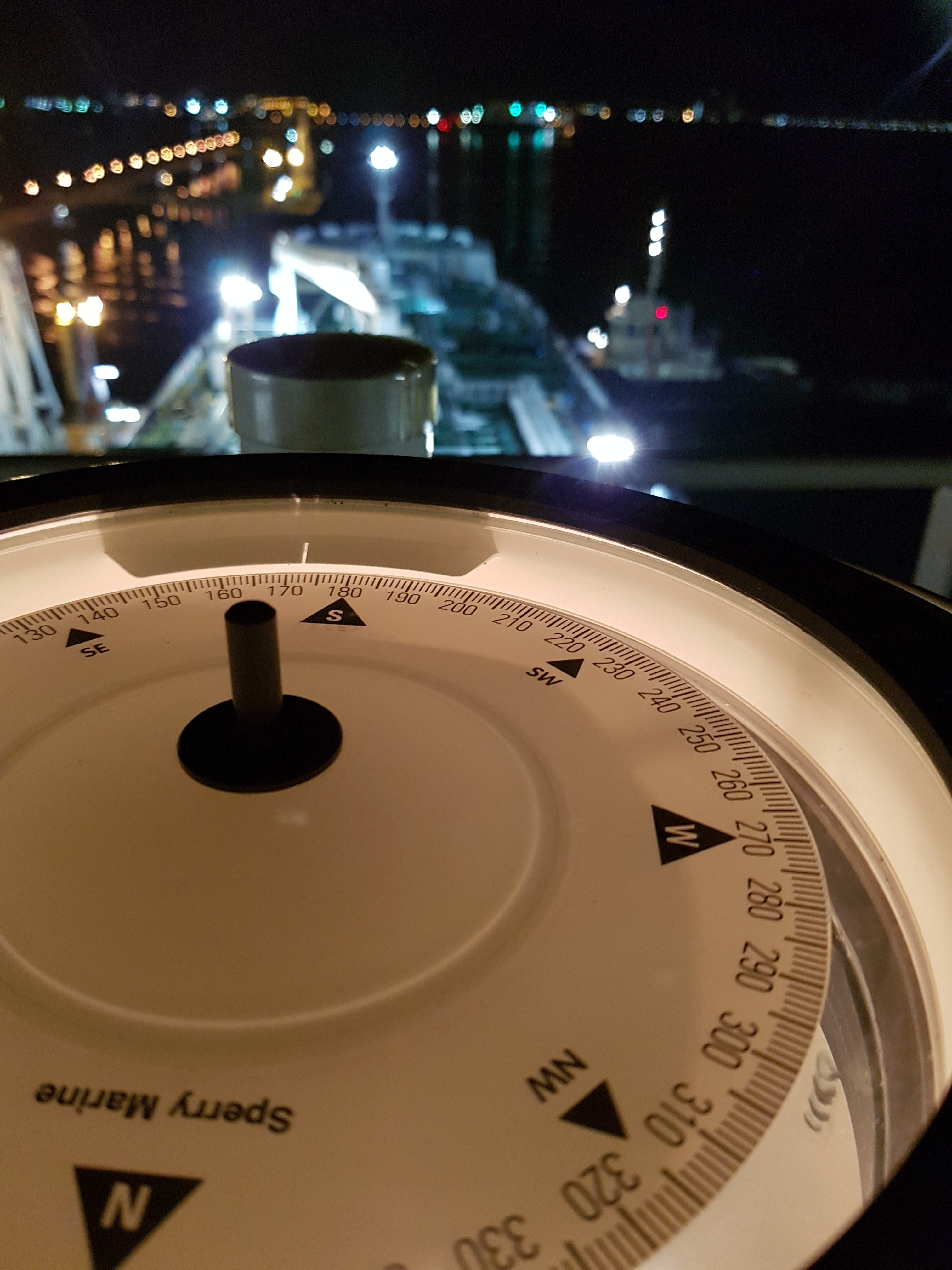
A Compass Adjuster’s Declaration, Certificate and/or Deviation Card is an official document issued by a licensed Compass Adjuster on completion of a magnetic compass adjustment. It records the residual deviation on all headings and confirms that the compass has been adjusted in accordance with the applicable regulations. It also contains the particular details of the vessel relevant to the adjustment. It is required to be available onboard at all times for inspection purposes.
What are the different types of compass adjustment service?
A magnetic compass should be adjusted when any of the following apply: • Deviation on any compass heading exceeds 5 degrees • The magnetic compass is first installed on the vessel • The vessel undergoes any significant structural work, particularly in the area where the compass is positioned • Electrical or magnetic equipment and devices near the compass are added, removed or repositioned • The compass shows any physical defects, such as fluid discoloration, tilting of the compass card, or loss of fluid • The vessel has been laid up, idle, or has undergone dry-docking for a period of time • Deemed necessary by the Master for the safety of navigation • Reported as a deficiency by AMSA or any equivalent Port State Control or Flag State Control authority
Can you adjust the compass on my vessel while it is underway?
Yes. Our remote adjustment service allows our licensed Compass Adjuster to guide the vessel’s officers through the full adjustment process while the vessel is on her normal voyage, without the need to divert to port or impact operations.
Does my vessel need a compass adjustment certificate even if it has a flag state exemption?
Particular flag states grant exemptions from the requirement to hold a current Compass Adjuster’s Declaration and Deviation Card — for example, for vessels fitted with Dynamic Positioning (DP) systems and multiple gyrocompasses. However, these exemptions are not universally recognised by all port states. The Indian Directorate General of Shipping (DGS) is a notable example — it does not generally recognise flag state exemptions that have not been equivalently granted to Indian-flagged vessels. This means vessels calling at Indian ports or operating within Indian waters, including DP-class vessels fitted with multiple gyrocompasses, are required to hold a current Compass Adjuster’s Declaration and Deviation Card regardless of any flag state exemption. More broadly, Port State Control inspectors operating under any of the regional Memoranda of Understanding (MoUs) — including the Tokyo MoU (Asia-Pacific), Paris MoU (Europe and North Atlantic), Indian Ocean MoU, and others — apply the requirements of SOLAS Chapter V directly. A vessel that cannot produce a current deviation card during a PSC inspection may be issued a deficiency notice or detained, regardless of any flag state exemption held. Vessel owners and operators are strongly advised to confirm the compass certificate requirements of every port state their vessel intends to call at, and not to rely solely on flag state exemptions when trading internationally. If you are unsure whether your vessel requires a current compass adjustment certificate for a specific port or trade area, contact us and we will be happy to advise.
Do you service vessels outside of Western Australia?
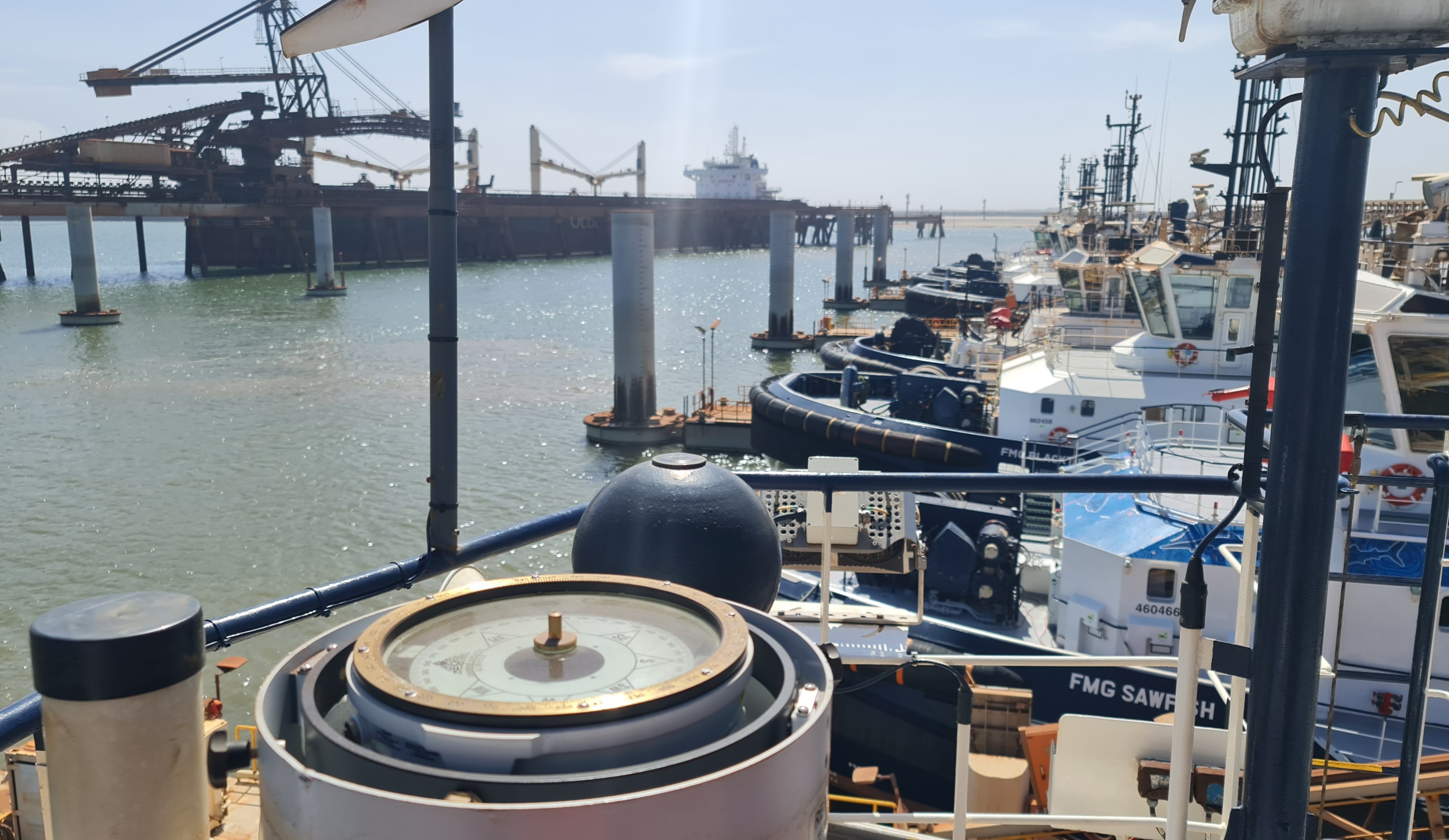
Yes. We provide compass adjusting services Australia-wide and globally. We routinely attend vessels at ports including Fremantle, Kwinana, Bunbury, Geraldton, Esperance, Karratha and Port Hedland, amongst others, and provide remote adjustment services to vessels.
hat happens if my vessel has received an AMSA deficiency notice for the magnetic compass?
Please contact us, or have your representative such as a local shipping agent contact us, as soon as possible. We will assess the deficiency notice and the condition of the magnetic compass and provide appropriate solutions to return the magnetic compass to compliance. Where required, we will attend the vessel utilising one of our attendance methods — physical onboard, dockside, or remote — and issue a Compass Adjuster’s Declaration and Deviation Card on completion.
What is the difference between a Compass Adjuster (Limited) and a Compass Adjuster (Unlimited) license?
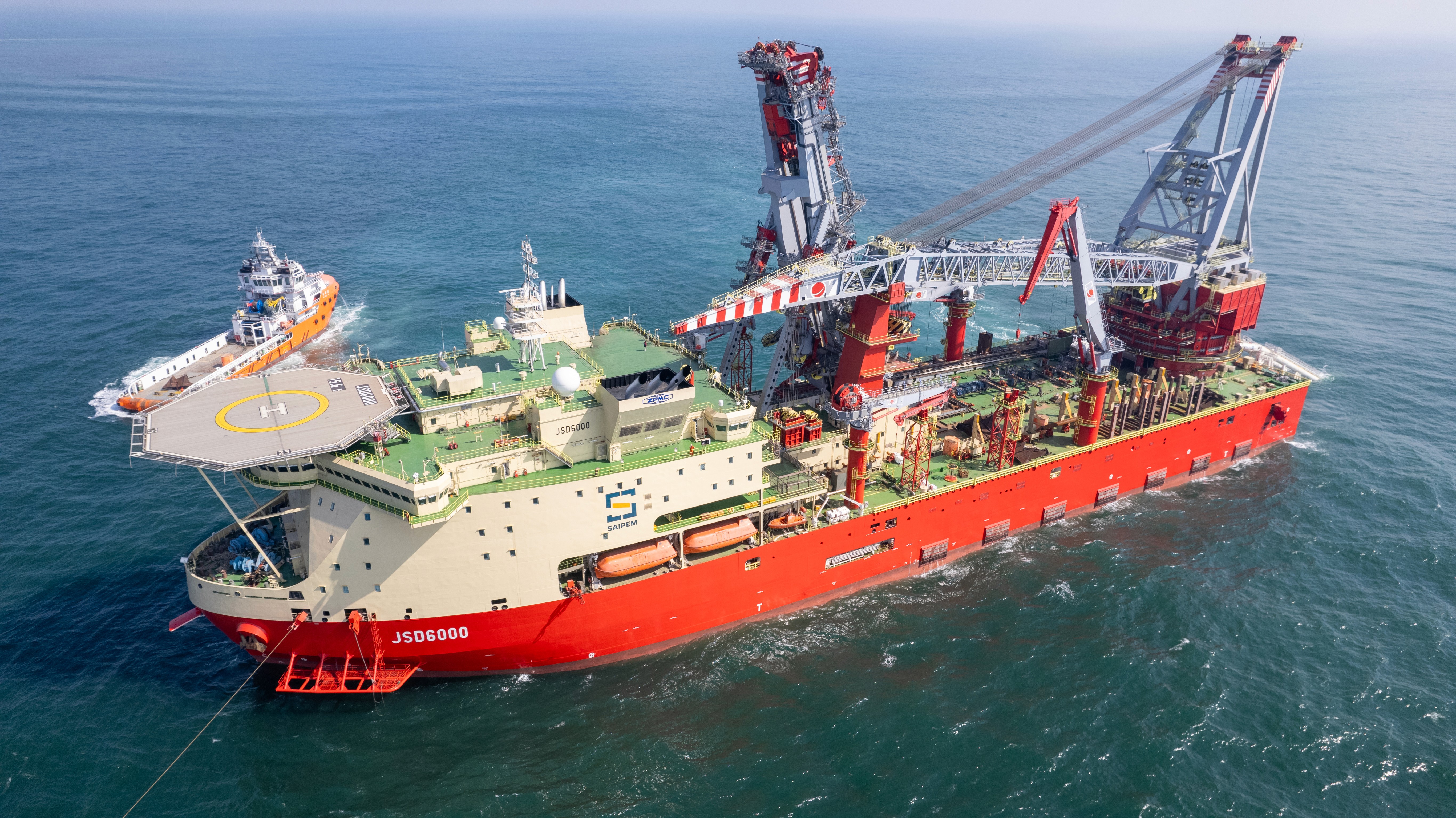
In Australia, the Australian Maritime Safety Authority (AMSA) issues compass adjusting licenses in two categories — Limited and Unlimited. Compass Adjuster (Limited) A Compass Adjuster holding a Limited license is authorised to perform magnetic compass adjustments on vessels up to 45 metres in length only. This restricts the adjuster to smaller commercial and recreational vessels and means they cannot legally adjust the compass on larger commercial vessels, offshore industry vessels, naval vessels, oil tankers, cargo vessels, or any other vessel exceeding that length. Compass Adjuster (Unlimited) A Compass Adjuster holding an Unlimited license is authorised to perform magnetic compass adjustments on any vessel, of any size, of any flag, in any operational area — with no restriction on vessel length, gross tonnage or trading area. This includes all classes of seagoing vessel from small craft through to the largest commercial vessels trading internationally under SOLAS. A note on terminology The Unlimited license was previously recognised and commonly referred to as an Unrestricted license, and the Limited license was previously referred to as a Restricted license. The current AMSA terminology is Limited and Unlimited. Both terms refer to the same license categories and the same scope of authority.
What licenses do the Compass Adjusters at Magnetic Compass Solutions hold?
All Compass Adjusters at Magnetic Compass Solutions hold Compass Adjuster (Unlimited) licenses issued by the Australian Maritime Safety Authority — previously recognised as Unrestricted licenses. This means we are authorised to perform magnetic compass adjustments on any vessel, of any size, of any flag, in any operational area.